
Robbery Bob 2: Double Trouble
Deca_GamesAction
4.35.09K Reviews
- Version
- 1.21.2
- Installs
- 100.00M
- Age Rating
- Everyone 10+
Screenshots
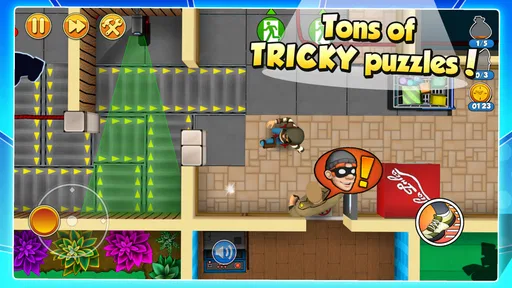
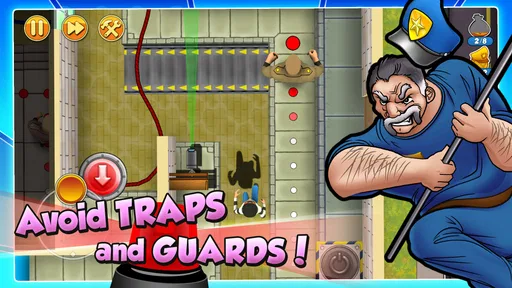
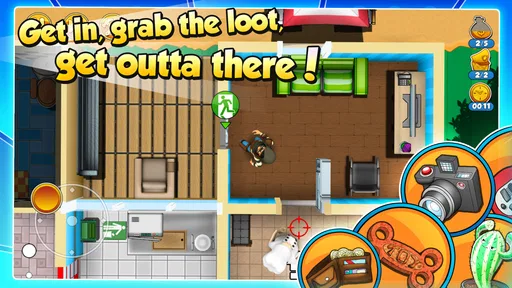
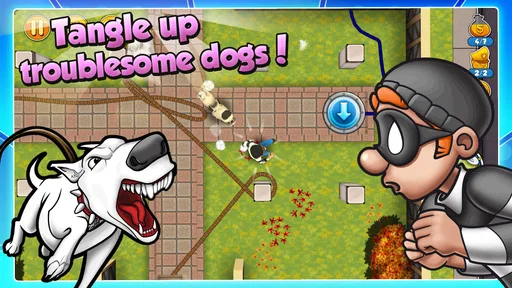
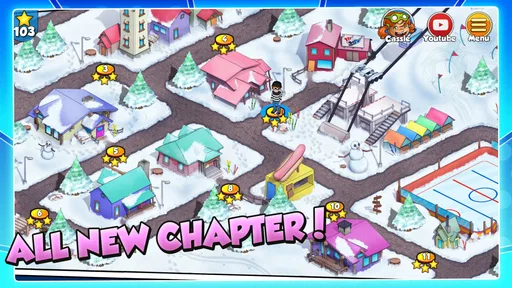

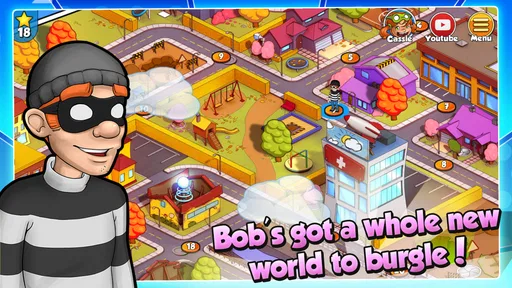
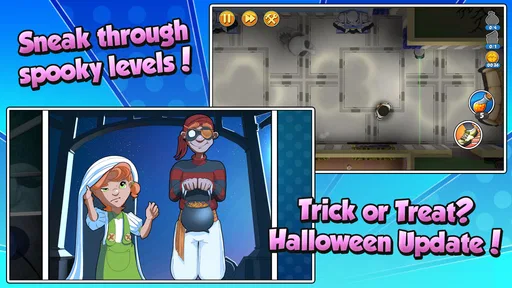
Our Review of Robbery Bob 2: Double Trouble
 Analysis by Appyee
I approached Robbery Bob 2: Double Trouble as a quick-action game rather than a serious stealth simulator, and that distinction matters. It puts me in the role of Bob, a thief who has to move carefully, avoid being noticed, and gather valuables before getting caught. The basic idea is easy to understand, but the fun comes from judging timing, routes, distractions, and risk one small decision at a time.
That makes it a useful choice for someone who wants an approachable stealth game on a phone. I can start a level without learning a complicated control system, play for a short while, and stop after a successful escape or an amusing failure. At the same time, it is not the right fit for every player. Anyone looking for a realistic robbery simulation, a deep story, or a purely relaxed puzzle experience may find its cartoon presentation and action-oriented rhythm too light.
How I judged the game before recommending it
My first decision criterion was whether the controls make sneaking feel manageable on a touchscreen. In this game, the challenge is not based on having a large number of buttons. It is about moving Bob through spaces, reading what is happening around him, and choosing when to advance. That simplicity is a strength because I can concentrate on the situation instead of fighting the interface.
The second criterion was variety in moment-to-moment play. A stealth game becomes tiring if every stage asks me to repeat exactly the same movement pattern. Here, the appeal comes from changing layouts, different threats, and the need to adjust my approach. I do not simply walk toward an objective; I watch, wait, and decide whether taking an extra item is worth the danger.
I also considered how well it works in ordinary daily use. This is the sort of game I would open while waiting for an appointment, during a short break, or when I want something more interactive than scrolling. It does not demand that I reserve a long uninterrupted evening. A typical session can be built around completing a few attempts, although a difficult stage can still tempt me to keep trying longer than planned.
Finally, I looked at the balance between free access and optional spending. The game is free to download, while in-app purchases range from $0.99 to $19.99 per item. That does not automatically make the experience unfair, but it does mean I would approach the purchase elements carefully. I would first learn whether the normal progression suits me before spending money to make any particular obstacle easier.
The controls reward patience more than speed
One of the useful lessons I learned early is that rushing is usually the least reliable strategy. When I moved forward simply because a path looked open, I often created a problem a few seconds later. A better habit was to pause, observe the available route, and think about where Bob could go if the situation changed.
This gives the game a nice middle ground between action and planning. It is not a slow, highly technical stealth title, but it does ask me to control my impulses. The best runs often came from taking a less obvious route rather than trying to cross the most direct line. That is a concrete reason to play carefully: the shortest path is not always the safest one.
Another practical tip is to treat optional treasure as a decision instead of an automatic requirement. If I was already close to completing a stage, reaching for one more item could turn a clean escape into a restart. Players who focus on finishing first can learn the layout and then return with a better idea of how much extra risk they want to accept. That approach makes the game less frustrating than trying to collect everything immediately.
Why the presentation works for short sessions
The playful tone helps keep failure from feeling too severe. Bob is not presented as a grim, realistic criminal, so being caught feels more like a comic setback than a heavy punishment. That tone is especially useful on mobile, where I may want a game that creates tension without becoming emotionally exhausting.
The age rating is Everyone 10+, which fits the light action and mischievous premise. I would still consider whether the child using the device understands the difference between cartoon theft and real-world behavior, but the overall presentation is clearly designed as humorous entertainment rather than a realistic crime lesson.
The game comes from Deca_Games and has developed a large audience, with over 100 million installs and an average rating of 4.3 from around 1 million ratings. Those figures do not replace personal testing, but they do suggest that the simple stealth formula has broad appeal. I can understand why: the premise is immediately clear, and the game does not force a new player to study a manual before starting.
Where this game wins against familiar alternatives
Compared with a traditional action game, the main advantage here is control over the pace. Many action titles reward constant movement, rapid attacks, or quick reactions. This one gives me reasons to stop and observe. Even when the presentation is energetic, the successful decision is often the one made before the chase begins.
That difference makes it a good alternative for someone who likes action but wants more thought between bursts of movement. I can still feel pressure when a plan goes wrong, yet I am not relying only on reflexes. A player who struggles with fast combat may enjoy this structure because the important skill is awareness and timing.
It also has an advantage over more serious stealth games when I want a lighter commitment. A complex stealth title may offer richer systems, but it can also require more attention, more time, and more tolerance for repeating long sections. This game is easier to pick up for a short session. I can experiment, fail, and try again without feeling that I have lost an entire evening.
Its strongest quality is the way it turns ordinary movement into a small tactical problem. I am not merely collecting objects. I am deciding whether to wait, whether to take a longer route, and whether the reward justifies the exposure. That makes the treasure-collecting objective more interesting than a simple checklist.
Small habits that improve the experience
I found three habits especially useful. First, I learned the safest exit before chasing optional rewards. Knowing how to leave changes the whole level because I can make a more informed decision when the opportunity appears. Second, I stopped treating every failed attempt as wasted time. A failed run often reveals the timing of a patrol or the danger of a particular route.
Third, I used short practice attempts instead of trying to complete everything perfectly at once. I would enter a stage with one purpose, such as learning the movement pattern or testing a risky corner. Once I understood that part, the complete run became less dependent on luck. This is a simple workflow, but it makes the game feel more like a puzzle that I am solving than a sequence I must memorize blindly.
There is also a useful trade-off between speed and completeness. Finishing quickly may feel satisfying, but collecting more can make the same level more engaging for players who want extra challenge. I like that the decision belongs to me. Someone playing casually can prioritize escape, while a more persistent player can push for a fuller result.
What may make another category a better choice
I would not choose this game for someone who wants deep character development or a story that carries the experience. Bob’s identity gives the levels personality, but the central pleasure is sneaking and collecting, not following a complex narrative. A story-driven adventure would be a better match for a player who needs dialogue, exploration, and long-form progression to stay interested.
I would also point competitive players toward another type of game if their main goal is direct multiplayer rivalry or highly precise combat. This experience is built around individual stage decisions and comic stealth situations. It does not replace a competitive action game for someone who wants ranking pressure, team coordination, or constant player-versus-player intensity.
Puzzle purists may have a similar reservation. There is planning here, but the game is not just a quiet logic exercise. The pressure of being detected and the need to move through a level give it an action flavor. If I wanted unlimited time to calculate every possibility, I would prefer a slower puzzle format.
There is also the question of repetition. The central loop is deliberately focused: enter, avoid trouble, collect what is worthwhile, and get out. That focus is excellent when I want a familiar structure with changing situations, but it can feel narrow if I need a constant stream of new mechanics. I would recommend trying it with realistic expectations rather than assuming it will become a completely different genre later.
Free access, purchases, and the cost of changing games
Because the game is free, the initial decision is easy. I can install it, learn the controls, and decide whether the stealth loop works for me without paying at the start. That is valuable for a mobile game because the most important question is not how attractive the premise sounds; it is whether I enjoy repeating the basic movement and escape cycle.
The in-app purchase range deserves a practical approach. I would avoid buying anything during the first few sessions. Instead, I would identify whether I am stuck because I have not understood the level or because the design is asking for a kind of patience I do not enjoy. Spending money cannot fix a mismatch between my preferred play style and the game’s core loop.
If I were sharing the device with a younger player, I would pay attention to purchase controls before handing it over. The age rating is Everyone 10+, but the ability to make optional purchases means the device owner should still manage spending responsibly. That is not a criticism unique to this title; it is simply part of using any free game with paid items.
The current version is 1.21.2, and the minimum operating system is Android 7.0. For someone using an older Android phone, checking compatibility before planning a long-term download is sensible. On a supported device, I would still keep expectations realistic: a game designed for mobile convenience is best judged by how comfortably it fits into my routine, not by whether it replaces a console stealth adventure.
Switching away from it is easy if I discover that the loop is not for me, but there is a small cost in learning any replacement. A more complex stealth game may offer more depth while taking longer to understand. A pure action game may feel immediately exciting but provide less room for observation. A puzzle game may be calmer but lack the comic tension of being caught. The right alternative depends on which part of this experience I value most.
A realistic everyday use case
Imagine I have ten minutes before a train arrives. I want something that gives me a clear objective but does not punish me for stopping after one attempt. This is where the game fits well. I can enter a stage, test a route, learn from a mistake, and either finish the run or close the app. The session has a natural stopping point, unlike some games that leave me in the middle of a long mission.
On a longer evening, the same design can become more absorbing. I may replay a level to collect more treasure or find a safer sequence. The experience changes from casual distraction to small-scale mastery without needing a separate mode. That flexibility is one of its more practical strengths.
However, I would skip it when I am looking for a calm activity with no pressure. Even though the art style is friendly, being detected can create repeated attempts, and some players may find that irritating after a busy day. In that situation, a slower puzzle or a non-failure-based game would probably be a better choice.
My recommendation after weighing the trade-offs
Robbery Bob 2: Double Trouble is a good recommendation for players who want approachable mobile action with a stealth twist. I like that it makes observation matter without turning every level into a technical exercise. The controls are accessible, the cartoon tone keeps setbacks manageable, and the choice between a quick escape and extra treasure gives the basic loop enough flexibility for different moods.
I would recommend it especially to someone who enjoys short attempts, route planning, and the satisfaction of improving after a mistake. It is also a sensible first step for a player curious about stealth games but unwilling to commit to a complicated title. The free entry point makes that trial straightforward, provided optional purchases are treated as a choice rather than a requirement.
I would not recommend it to someone who needs a deep story, serious realism, multiplayer competition, or a constantly changing set of mechanics. Those players may be happier with a narrative adventure, a competitive action game, or a dedicated puzzle title. This game knows what it wants to be, and its focused design is both its appeal and its main limitation.
My final advice is to play it patiently. Learn the safest exit, test dangerous routes in small attempts, and decide whether extra treasure is worth the risk instead of chasing every reward automatically. If that style sounds enjoyable, this action game can turn a few spare minutes into a surprisingly engaging stealth session. If you prefer speed, spectacle, or story above all else, choosing a different category will likely give you more lasting satisfaction.
Verdict
Strengths of Robbery Bob 2: Double Trouble
- Funny cartoon style and expressive animations make every level entertaining.
- Short missions fit well into quick gaming sessions.
- New gadgets add variety to sneaking and escaping strategies.
- Simple controls are easy for younger and casual players to learn.
- Distinct locations keep the scenery and objectives from feeling repetitive.
Limitations of Robbery Bob 2: Double Trouble
- Some later levels require repeated attempts to learn guard patterns.
- Optional purchases can speed up progress or unlock extra content.
- Frequent ads may interrupt play for users on the free version.
- Certain objectives feel restrictive when only one solution works.
- The game can use considerable battery during longer play sessions.
Other Releases by Deca_Games
View All
Robbery Bob - King of Sneak
Action4.4
Similar Picks in This Category
View All
Temple Run 2: Endless Escape
Imangi Studios4.1

PUBG MOBILE
Level Infinite4.3

Free Fire: 9th Anniversary
GARENA INTERNATIONAL I4.4

Talking Tom: Hero Dash Run
Outfit7 Limited4.3

slither.io
Lowtech Studios3.9

Sniper 3D:Gun Shooting Games
Wildlife Studios4.6
Frequently Asked Questions
What is Robbery Bob 2: Double Trouble about?
Robbery Bob 2: Double Trouble is a stealth-focused adventure game in which you guide Bob through a series of humorous burglary missions. The objective is not simply to collect valuables, but to avoid guards, security systems, animals, and other obstacles while reaching the exit. Each level rewards careful timing, exploration, and smart use of the environment rather than rushing forward.
Is Robbery Bob 2: Double Trouble free to download and play?
The game is generally available as a free download on supported Android and iOS devices, but players should expect optional in-app purchases. These may be connected with progression, convenience, or additional resources, depending on the current version and platform. It is possible to enjoy the main experience without spending money, although some users may encounter advertisements or incentives to purchase extras.
Does the game require an internet connection?
Many missions in Robbery Bob 2: Double Trouble can usually be played without a constant internet connection, which makes it suitable for short sessions while traveling or when mobile data is unavailable. However, online access may still be needed for advertisements, purchases, updates, account-related features, or certain promotional content. Requirements can vary after updates, so checking the store listing is recommended.
Is Robbery Bob 2: Double Trouble suitable for children?
The game uses cartoon-style visuals, comic situations, and lighthearted stealth rather than realistic violence, making it broadly approachable for younger players. Nevertheless, parents should review the age rating and consider the presence of advertisements and optional purchases. Some missions require patience and planning, while repeated failures or timed situations may be frustrating for very young children.
What devices are compatible with Robbery Bob 2: Double Trouble?
Compatibility depends on the operating system, device model, available storage, and the minimum version supported by the developer. The game is designed for Android and iOS smartphones and tablets, but older devices may experience slower performance, longer loading times, or installation restrictions. Before downloading, users should check the official Google Play or App Store page for current requirements.
Play our best games!


